This post contains affiliate links. When you purchase through our links, we may earn a commission.
This pesto recipe uses Tuscan kale aka cavolo nero and a handful of everyday ingredients. Quick and nutrient packed condiment, which could be used in a variety of ways!
Looking for a classic pesto? Then check out our basil pesto recipe!
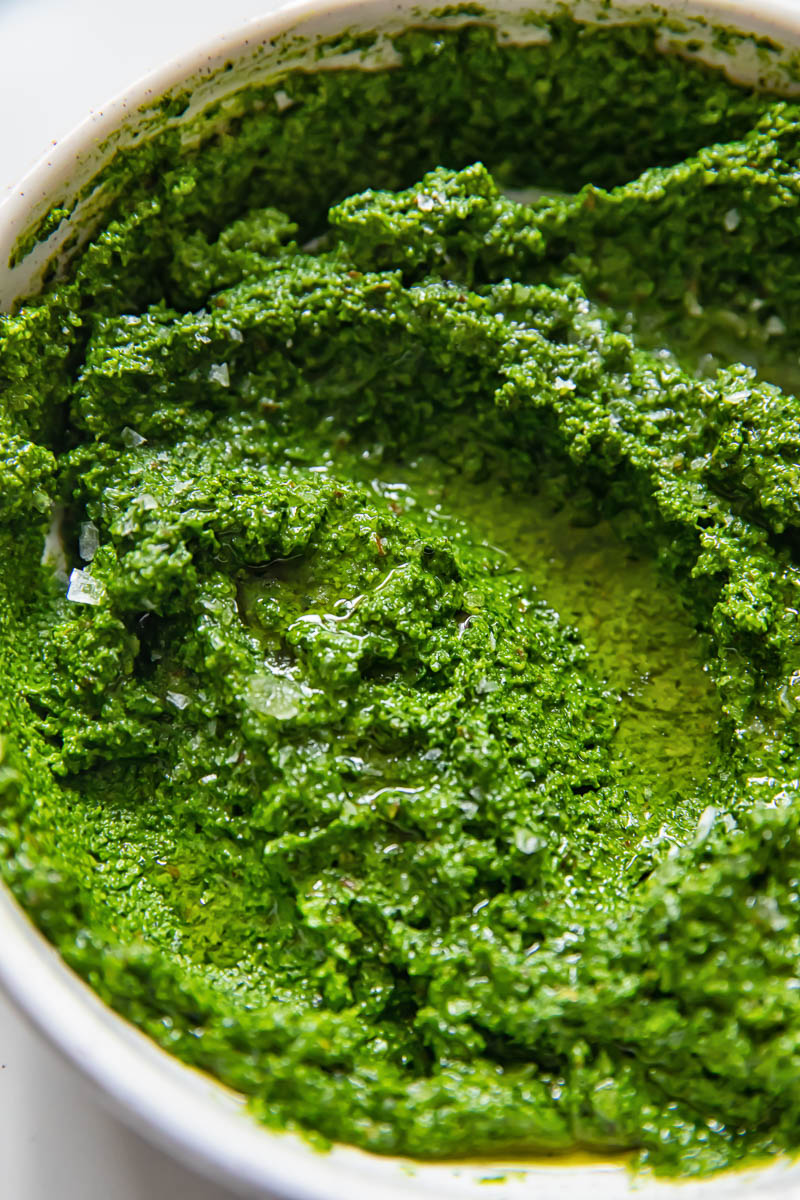
Pesto is an ingredient we usually buy pre-made because it’s delicious and versatile. All true but the store bought versions can never compare to the homemade ones.
The freshness of the flavours, the vibrancy of the colour. They are just begging to be eaten straight away. I am a huge fan of the classic basil pesto and I use it in so many of my recipes.
This chicken caprese, smothered with the pesto and topped with melted mozzarella, is one of my most recent loves. And it turns out you love the simplicity of the taste as much as I do.
Today I want to talk about kale pesto. Every time I heard about it in the past I just could not image how kale can flavour anything. Yes, it’s chock full of nutrients but can you really compare it to fragrant fresh basil?
Over the years I’ve made pesto sauce using spinach and cilantro, mint and pistachio but always stayed clear of kale.
My recent trip to Florence proved me wrong. Yes, it can be used in pesto on equal footing with basil. Yes, it does carry a different flavour but it is just as delicious!
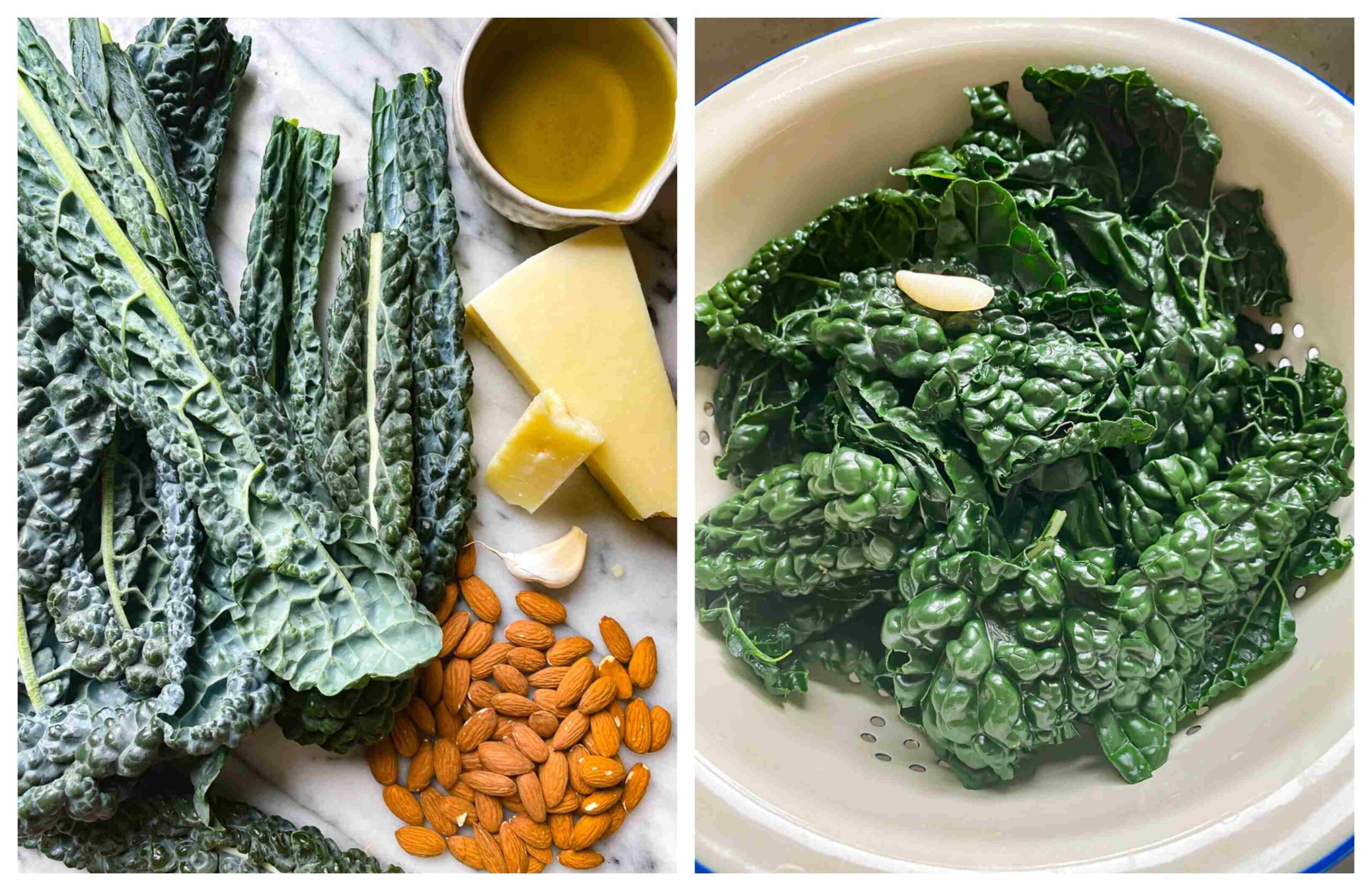
What is Tuscan Kale?
I am used to the curly kale native to the UK and the most common type found here. But I have to confess, I do not love it. I find the texture too coarse and abrasive. Cavolo nero, though, gets me very excited.
It is also called Tuscan kale, lacinato kale or translated as black cabbage in Italian restaurants.
I love the taste and texture, and it’s absolutely gorgeous to look at. Tuscan kale is delicious in soups, pastas, curries and pretty much anything else you can think of.
Don’t even get me started on its nutritional value. It is truly a powerhouse!
I often choose Tuscan kale over spinach as I prefer a firmer texture. And now I am going to show you how it could be used in a pesto recipe.
Recipe Tips and Notes
- Cavolo nero is a very typical Tuscan ingredient. It was featured very prominently throughout the menus in every restaurant we went to. And while I was used to adding it to pasta recipes, using it in a pesto was new to me. Here is what you need to know to get the most taste out of your kale pesto.
- First of all, cook the kale before blending it. Due to its coarse and fibrous texture Tuscan kale leaves need softening first.
- It is customary to cook garlic along with the kale, which contributes to a milder flavour in a pesto. Traditional Tuscan cuisine is not heavy on garlic.
- Some people actually discard the garlic after cooking it with kale but I use it. If you prefer bolder flavours, use 1 raw clove of garlic instead of cooked.
- The list of the ingredients is not very long. Nuts, such as almonds, hard Pecorino Romano cheese and extra virgin olive oil. Toss in a bunch of kale and blend everything in a This is an affiliate link.food processor or a This is an affiliate link.blender until smooth. Don’t forget to salt to taste.
- Pine nuts are traditional for pesto, but lots of other varieties can be used instead. Walnuts can work very well, but I’ve gone with almonds!
- Be sure to use grated Parmesan, pecorino romano or grana padano. Freeze dried cheese will just not do the job!
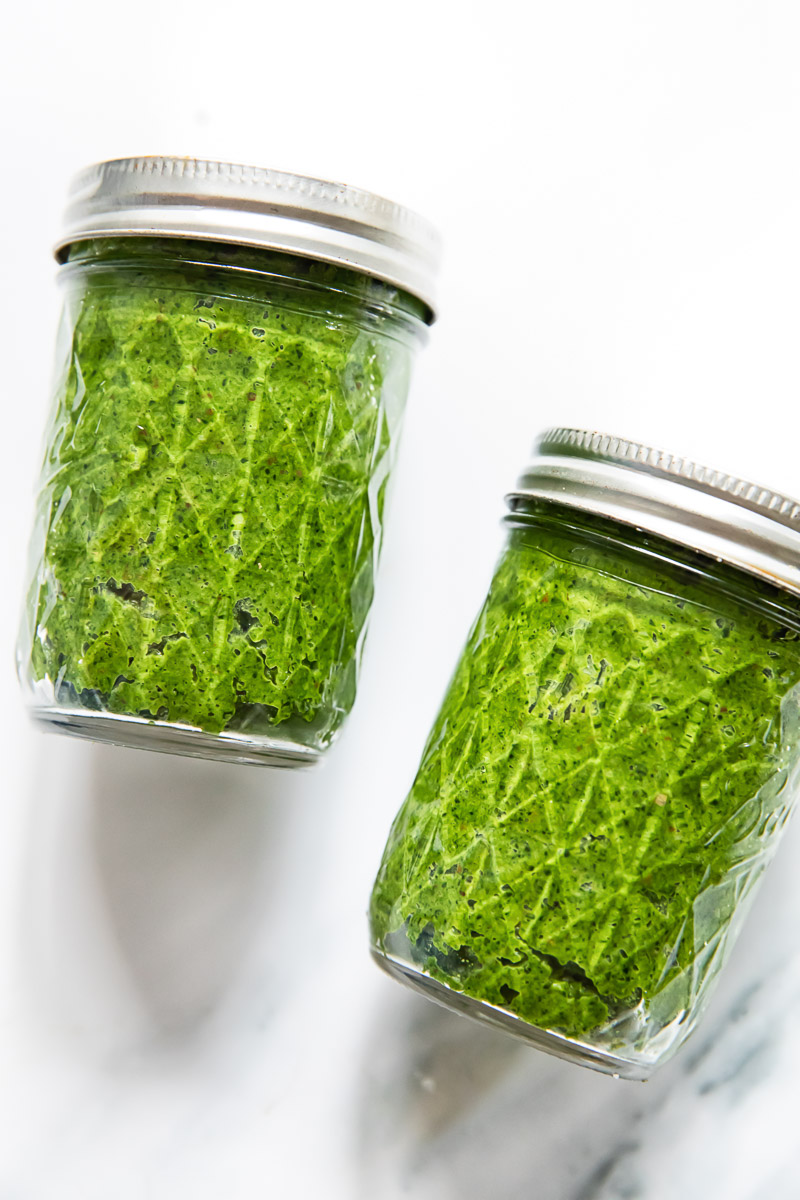
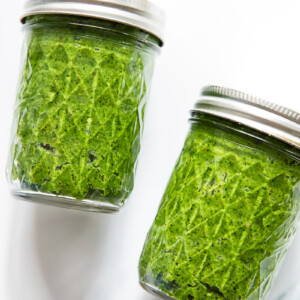
- My final tip is to cover the pesto with good quality This is an affiliate link.olive oil once you pack it in clean jars. This way you will be able to preserve the vibrant colour and its delicious taste.
Serving suggestions
As I mentioned above, you can use in in a pesto pasta, serve alongside a fish or chicken. Top crostini with pesto or dab all over your charcuterie platter for more flavour.
I’ve also created a Salmon Orzo that gets heaps of flavour from using this pesto!
Or simply stir a dollop into your scrambled eggs or drizzle over hash browns to make your mornings a bit brighter. Or smear a layer on sandwiches or homemade pizza!
The uses of this flavour bomb is limitless. Let your imagination guide you. I would love to hear what you come up with!
Storage and leftovers
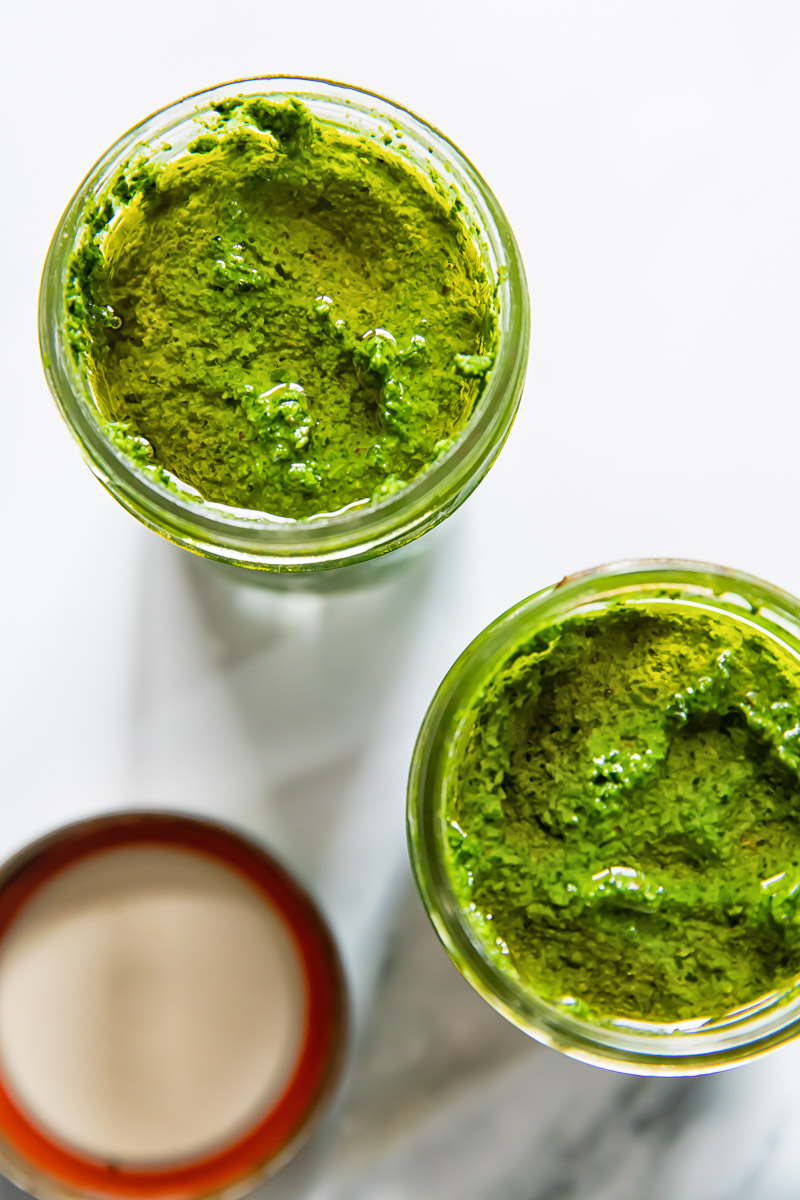
Keep the prepared pesto in a refrigerator and eat within 1 week to 10 days. Use an This is an affiliate link.airtight container.
To prevent discolouration, add a layer of olive oil over the pesto before storing.
Favourite Recipes Using Tuscan Kale
- Truffled Lentil and Kale Risotto
- Winter Salad with Red Cabbage, Tuscan Kale and Pomegranate
- Healthy Mini Frittatas
- Chicken Meatball Soup with Tortellini and Tuscan Kale
Tuscan Kale Pesto Recipe
Equipment
- This is an affiliate link.blender or This is an affiliate link.food processor
Ingredients
- 400g / 14 oz cavolo nero (Tuscan kale)
- 1-2 cloves garlic
- 100g / 1/2 cup almonds, toasted
- 165ml / 2/3 cup This is an affiliate link.extra virgin olive oil
- 100g / 1 cup Pecorino Romano cheese, or Parmesan cheese
- salt to taste
Instructions
- Wash the kale and remove the stalks. Cook the kale with 1-2 cloves of garlic in a pot of salted water for 5-7 minutes. While the kale is cooking, toast the almonds on a dry pan for 5 minutes. Cool and set aside.
- Drain and add both the kale and the garlic to a food processor or a blender, then add the cubed Pecorino Romano cheese with toasted almonds and olive oil, process until smooth. Add salt to taste.
- Store in an airtight container with a layer of olive oil on top to prevent discoloration
Notes
Nutrition
Nutrition information is automatically calculated, so should only be used as an approximation.