This post contains affiliate links. When you purchase through our links, we may earn a commission.
Yorkshire Puddings are an iconic British side dish served with a traditional roast. These golden crowns of crispy batter rise to hot glory and sit alongside a court of roast beef, potatoes, vegetables and most importantly, buckets of gravy. Made from the most basic four ingredients you’ll be making them every Sunday. No idea what I’m talking about? Read on…
It’s worth clarifying straightaway that Yorkshire Puddings are not puddings at all. Disappointed? For actual puddings click here. Now we’ve cleared that up, and potentially lost a few readers, let’s move on.
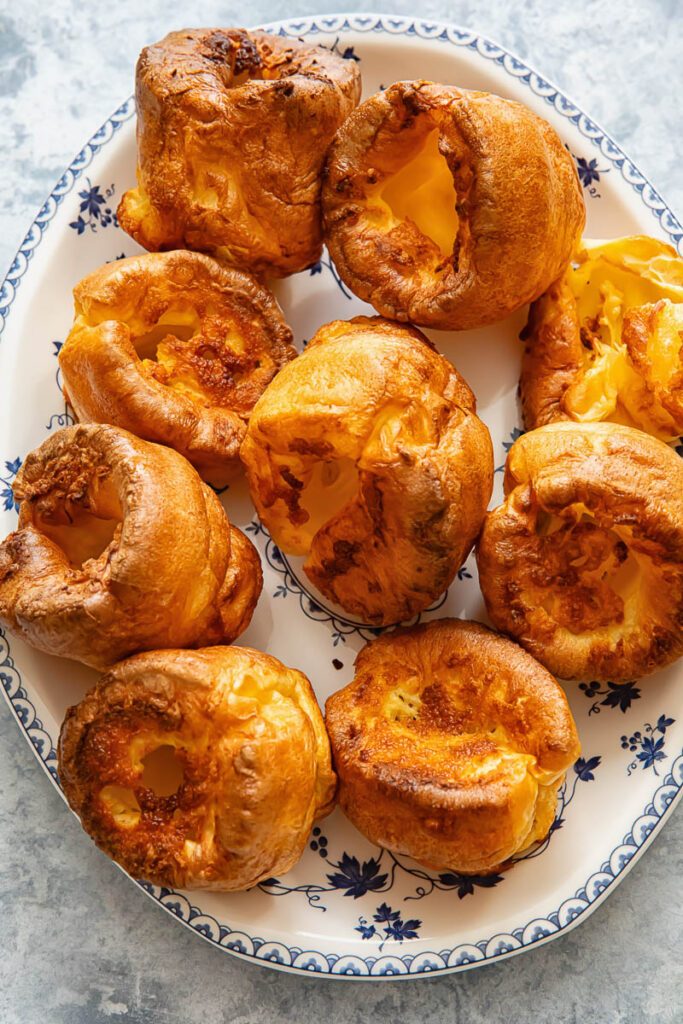
Imagine my confusion when I first encountered a Yorkshire Pudding! My suspicions that it might not be a pudding were raised on reading the pub menu: ‘Roast Beef with Yorkshire Pudding’.
There was no hint of what said ‘pudding’ would contain but being fond of a mystery, and keen to try my first slices of British roast beef on UK soil, I went for it.
The Yorkshire Puddings were, in fact, surprisingly familiar. On the plate beside the meat and trimmings, in a pool of darkest gravy, were two wonky and doughy-looking mini chimney pots. They reminded me of the North American popover.
On tasting one, I realised that they were virtually the same recipe. I noticed that the British versions were more savoury though, with an unctuous grease to them. Popovers, by contrast, are buttery, often served with butter and jam.
Knowing I could replicate the Yorkshire Pudding recipe at home, I have spent the last few years refining the method. And now I have it down to a fine art, it’s ready to share…
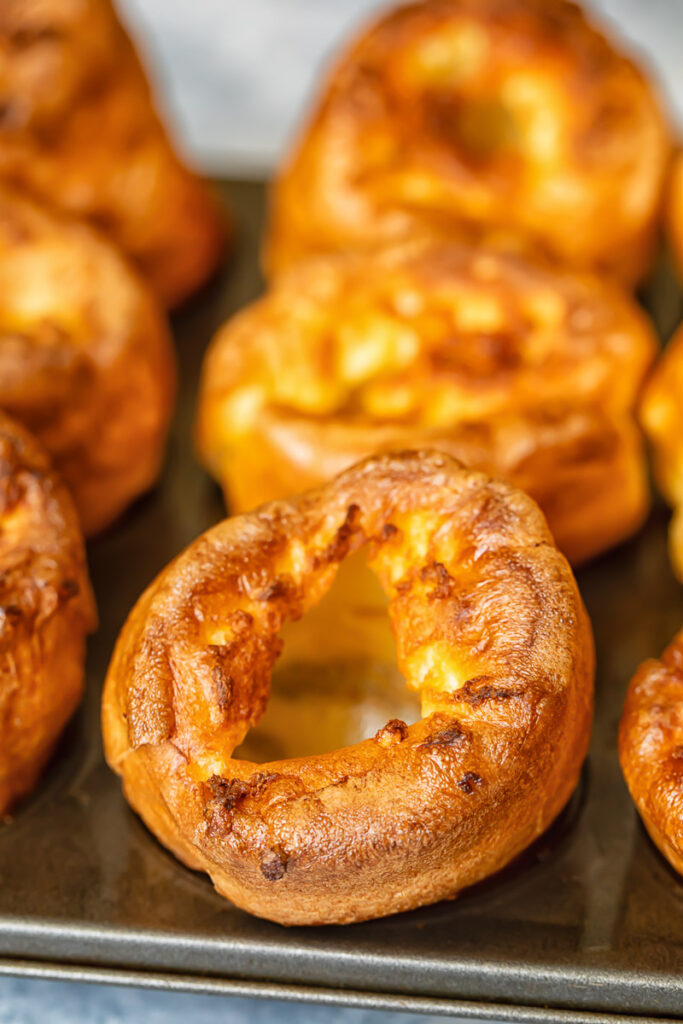
What are Yorkshire Puddings?
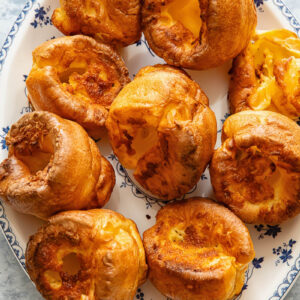
Yorkshire Puddings are a centuries old British recipe of eggs, milk, flour and salt. Sound familiar? It is! It’s basically a pancake batter, but unlike its characteristically flat cousin, a Yorkshire Pudding is gloriously round and risen in shape. Imagine a puffy, edible soup bowl. Perfect for cradling gravy.
Which is how they were originally served. These cheap and accessible ingredients made for stodgy, belly-filling gravy boats for those whose meat budgets were meagre.
Nowadays, the ideal Yorkshire Pudding should not be heavy or stodgy. They are wafer light, crisp-shelled and golden, but they are made to varying scales. I like mine in teacup-sized proportions. But I have come across competitively ‘giant’ Yorkshire Puddings, which, imo, only eclipse the other components of the meal.
Erm, why ‘Yorkshire’? Well, there are two versions. Yorkshire Puddings were first known as ‘dripping puddings’ as the fat used to cook them in was leftover beef dripping. Later, having been featured in a cookbook of the 1700s by a Yorkshire-born cook they became referred to as Yorkshire Puddings.
The second (debated) version is that the booming coal industry in Yorkshire meant that ovens from that region were hotter, a necessary element for the perfect pud, therefore the very best ones could be eaten there.
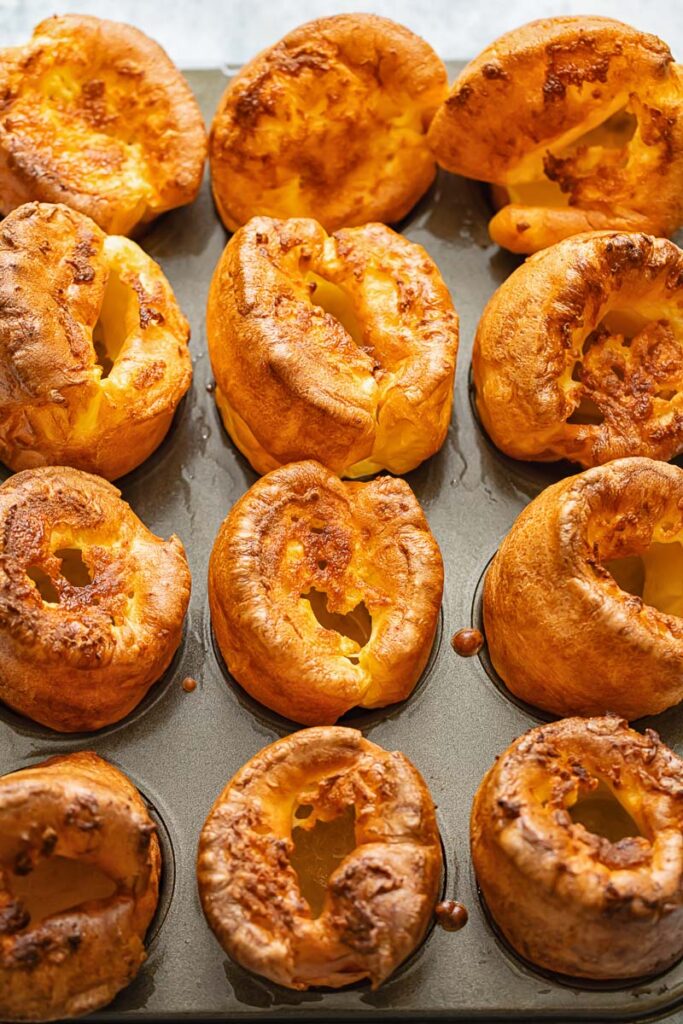
Recipe tips and notes
- I defer to Mary Berry, the duchess or British baking, when it comes to Yorkshire Puddings. Her recipe yields the lightest and crispiest puds.
- If you prefer a more weighty Yorkie, double the flour, this adds a puddingy sponginess. Which some folk quite enjoy.
- Yes, Yorkshire Puddings are the original popovers, my North American friends. The only difference is the cooking fat used (butter vs oil).
- Traditionally made using leftover beef dripping, modern recipes tend to use vegetable oil to make them more accessible to varied dietary requirements. And, does anyone still keep dripping?
- Well, me. Sometimes. I had a little duck fat leftover from Christmas and so I put it to good use here!
- However, any vegetable oil will do except olive oil- due to its low smoke point.
- If you can, rest the batter. Even 30 minutes is enough! This allows the gluten to relax and the Yorkies to rise to glory.
- Yorkshire Puddings do not share oven space with others. Any moisture from meat, potatoes or vegetables roasting will prevent their swell and leave them soggy.
- Fortunately, Yorkies will cook during the time the meat is resting so there’s no need to worry about dinner going cold.
- It is essential that both the oven and the fat are spitting hot before pouring in the mixture.
- Take care not to splash the sides of the muffin tray. Pour the batter directly into the centre of the muffin mould. There needs to be an oily barrier to prevent sticking.
- Also, do not open the oven until the puds are ready to come out! Premature checking will deflate them and there’s no coming back from that.
- Yorkshire Pudding making can be a learning curve. If they come out of the oven gorgeously tall like golden crowns, only to sadly deflate to flimsy flat caps, they hadn’t finished baking. Leave them in for longer next time.
Serving suggestions
This is an area of some controversy. Traditionalists will staunchly argue that Yorkshire Puddings can only be served with a joint of roast beef. Along with associated Sunday trimmings, of course. However, due to their massive popularity, home cooks and pubs have been bending the rules and serving them with any roast meat or vegetarian alternative.
Open-minded as I am, I still side with authenticity and have a pinkly centred rarish roast beef with my Yorkies. I am basically British now, after all!
A juicy prime rib roast beef centrepiece with perfectly crunchy-shelled roast potatoes, roasted carrots and parsnips and some cabbage greens is my dream roast dinner. However, as well as mouth-wateringly delicious, prime rib is also eye-wateringly expensive! So unless it’s a big occasion, more budget-friendly beef topside (top round) or slow cooker roast beef will probably be on the menu.
However, no-one’s judging if you choose to serve roast pork, roast lamb, chicken or turkey.
But the one thing that is universally agreed upon is there must be buckets of homemade gravy!
Storage and leftovers
This simple Yorkshire Pudding recipe makes 12 muffin tin-sized puds. My daughter and I only manage a restrained two Yorkies, but my husband and son will eat their quota of three. Is there any point saving two Yorkshire puddings? No. Besides, refrigerating them leaves them cold and flabby.
However, in colder months and if I’ve managed to use some drippings in the recipe, it makes sense to me to double up and make 24 puds and put the remainder in the freezer. They’ll keep in a freezer-safe bag in the freezer for up to 3 months.
Conveniently reheat (5 minutes at 220C/428F) for a family holiday roast like Thanksgiving or Christmas- although beware the purists who will argue Yorkies should not be served with turkey!
More holiday sides to try
- Traditional Calcannon Recipe
- Herb and Garlic Mashed Potatoes
- Hot Honey Baked Camembert in Bread Bowl
- Garlic Butter Sautéed Cauliflower with Breadcrumbs
Yorkshire Puddings
Ingredients
- 3 large eggs
- 225ml / 1 cup milk, 1%
- 100g / 3/4 cup plain / all purpose flour
- 1/4 tsp salt
- Beef dripping, lard or duck fat
Instructions
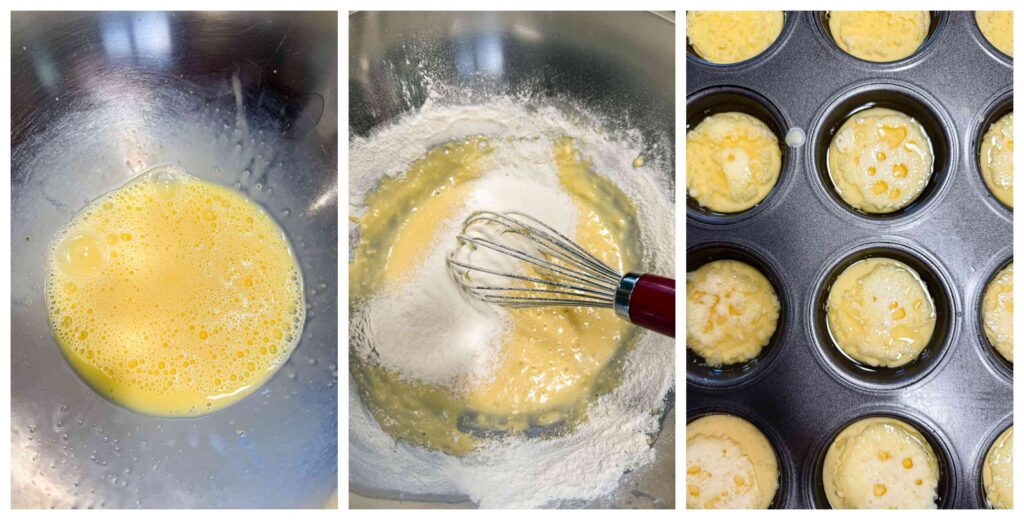
- Whisk the eggs with milk, then slowing add flour through a sifter and mix a lump free batter, then season with salt. Then transfer the batter to a jug with a spout and let it rest for at least 30 minutes. Preheat the oven to 200C/400F if fan assisted, otherwise to 220C/450F.
- 10-15 minutes before the batter is done resting, add a spoonful of lard or duck fat. If you are using beef drippings or vegetable oil, make sure it covers the bottoms of each muffin cup up to 1 cm. Put the muffin tin in the oven and heat the oil for 10-15 minutes or until it’s piping hot.
- When the batter is done resting and the oil is hot, take the pan out of the oven and distribute the batter evenly among the muffin cups. Make sure you pour the batter directly into the centre of each cup and try to avoid sides, work quickly and use a spoon to catch the drips.
- Put in the preheat oven and bake at 200C/400F fan assisted for 20 minutes. Do not open the oven to check on the puddings or they will deflate.
Notes
- To make a heftier Yorkie, double the amount of flour.
- Yorkshire puddings are traditionally made using leftover beef drippings, but using vegetable oil is more accessible for vegetarians and others with dietary requirements.
- Duck fat can also be used. Just make sure to use vegetable oil and not olive oil, which has a smoke point that is too low.
- Give the batter time to rest if you can, even just for 30 minutes. This lets the gluten relax and gives the Yorkies a better rise.
- Don’t cook the puddings at the same time as other items. Moisture from meat, potatoes or vegetables roasting in the same oven space will leave them soggy. It’s often convenient to cook them while the meat is resting.
- Make sure that the oven and fat are very hot before adding the mixture.
- Be careful not to splash the sides of the muffin tray when adding the batter. Pour it directly into the centre of the muffin mould to give it an oily barrier that will prevent sticking.
- Avoid the temptation to open the oven door until they are ready to come out. Prematurely opening the oven will deflate the puddings, which unfortunately can’t be fixed.
- Remember that perfecting Yorkshire Puddings can take some practice! If you find that they come out looking perfect only to deflate shortly after, then they haven’t quite finished baking and should be left longer next time.
Nutrition
Nutrition information is automatically calculated, so should only be used as an approximation.