This post contains affiliate links. When you purchase through our links, we may earn a commission.
A buttermilk brined turkey is more moist and more tender than a traditionally roasted turkey. FACTS! This easy-to-follow and failsafe recipe guides you and guarantees the juiciest of cuts for a truly triumphant holiday roast.
If your kitchen doesn’t have capacity for roast turkey for 12, try this dainty duck instead. Deliciously crispy and just as celebratory, roasted duck with port and cranberry sauce is a just as worthy centrepiece.
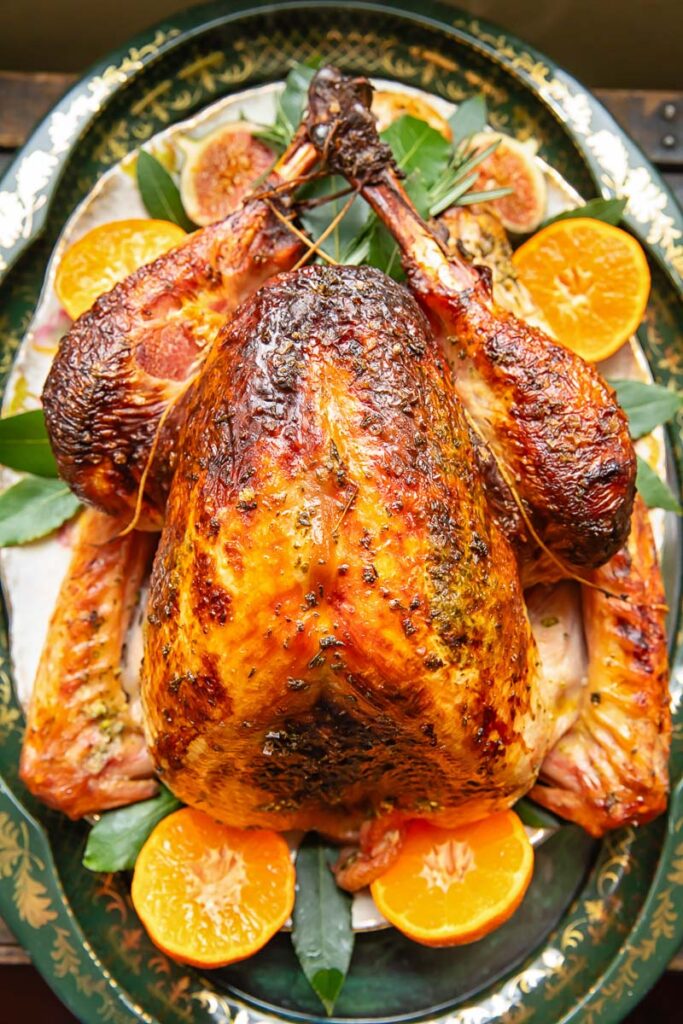
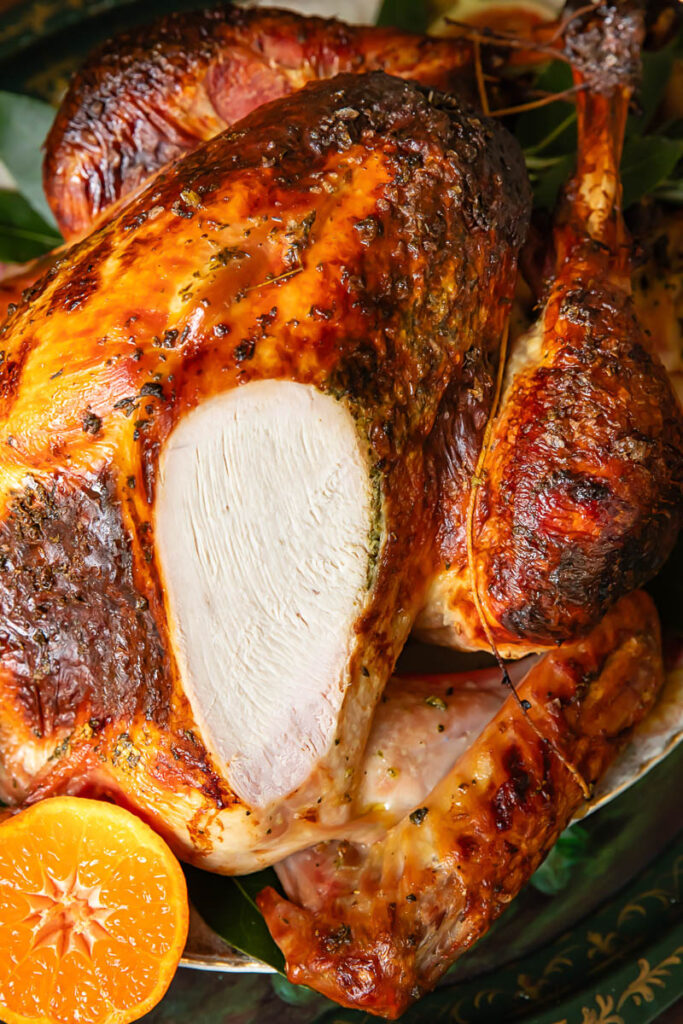
Whether your turkey turns out dry every time or not, this recipe for buttermilk brined roast turkey is one you have to try on the basis of pure deliciousness! It promises succulent meat, caramel brown skin and a subtle, savoury tang.
The original recipe calls for buttermilk, a low fat milk made with added lactic acid bacteria. Sounds weird but it does wonderful things! But thanks to the increase in the popularity and accessibility of kefir, a naturally fermented dairy product (which I love), you can use either.
Brined roast turkey
Let’s start by getting one fact straight. ‘Brine’ is not just salt water. We are not soaking a turkey in sea water for a day before cooking! ‘Brine’ is any liquid with a high concentration of salt.
The salt does three important things; 1) retains the meat’s moisture, 2) allows osmosis to occur (therefore flavouring the meat inside to out), and 3) tenderises the flesh. It’s all very sciency.
For this simple turkey brine recipe, I’ve used buttermilk (and water) as the liquid solution. Like the salt, the buttermilk breaks down the proteins in the meat which is what makes it deliciously tender and moreish. It also gives a slightly tangy flavour profile.
Ready to give it a try?
Ingredients and easy swaps
Most likely, the only ingredient you don’t already have in your kitchen (besides the turkey itself) is buttermilk. But this, and kefir, are easily sourced from large supermarkets.
- turkey – bigger is never better when it comes to turkey! It won’t fit in your bucket, fridge or oven! This brined roast turkey recipe is for a 4.5kg/ 10lb bird which is enough for 12 diners.
For the brine:
- buttermilk, water and salt – these are the key three, although you can replace the buttermilk with kefir if you prefer.
- fresh bay leaves and black peppercorns – optional aromatics to infuse the brining liquid and the bird. Make sure your bay is fresh!
For the herb butter:
- salt, butter, garlic and fresh herbs – I’ve used four herb varieties; sage, rosemary, thyme and parsley. Use what you have available or what you prefer
- lemon zest– don’t throw the lemon away!
How to brine a turkey (in 7 simple steps)
While the ingredients are everyday, the tools and time are factors you need to think about.
First, you’ll need a plastic bag and bucket, or tub, big enough for your turkey to fit into submerged, and that will slot neatly into your fridge.
Second, is time. The process itself is not labour intensive, but you do need to start a day in advance.
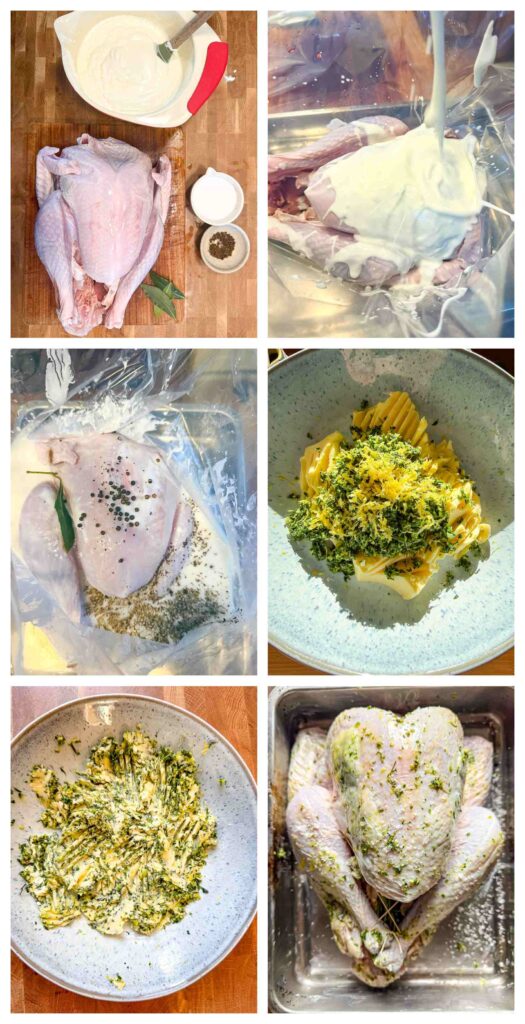
1. Make the buttermilk brine
In a container large enough to hold nearly 3 litres / 3 quarts of liquid, combine the buttermilk, cold water and salt.
If you’re using the aromatics, crush the bay leaves in your hands until they release their heady fragrance and add them to the brine. Add the whole peppercorns too.
2. Submerge the turkey
Place the plastic bag inside the bucket. Yes, you need both for extra security! You don’t want your turkey puncturing the bag and the contents spilling out into your fridge.
Position the turkey breast side down in your super-safe container, pour over the brine and tie up the bag.
3. Refrigerate for 24 hours
Don’t be tempted to over-brine the bird, it’s the difference between tender meat and mushy.
4. Prepare the bird for roasting
On roasting day, remove the turkey and tip away the brine. Use a paper towel to wipe the excess liquid from the bird, don’t rinse it! Rinsing will dilute the flavour and ruin the texture. Leave it to air dry while you work on Step 5.
5. Make the garlic and herb butter
I used a food processor to blitz the garlic and herbs, if you don’t have one, chop them as finely as possible. Mix evenly with the softened butter, lemon zest and salt and spread generously under the skin of the breast. Any leftover butter can be smeared over the rest of the turkey’s skin.
6. Truss the turkey
Remember that zested lemon you saved? Halve it and place it inside the cavity of the bird before tying up with kitchen twine. Do what now? If it’s your first time trussing a turkey or you need some guidance, watch the video in this post.
Finally, sprinkle with sea salt for extra seasoning and to help the skin crisp up temptingly.
7. Cook the bird
Put the buttermilk brined turkey into the oven and be sure to baste every 20 minutes until it’s cooked.
Important recipe tips and notes
- Using buttermilk to brine a turkey will give you the ultimate melt-in-the-mouth meat.
- Buttermilk is probably the most common tenderising liquid, but the rise of kefir is giving it a run for its money! Use kefir if you prefer it.
- Add fresh bay leaves and black peppercorns to the brine for an additional flavour infusion.
- Dried bay is no substitute- it needs heat to release its flavour.
- The garlic and herb butter should go under and over the skin.
- Roast your turkey to temperature not time. Use an This is an affiliate link.instant read thermometer to check the bird’s internal temp at its thickest, meatiest points. It should read 165F/75C.
What goes with it
Roast turkey is synonymous with the holidays and all the traditional Thanksgiving and Christmas sides. Take a look at my festive collections for everything you could possibly want for your holiday table.
However, if you’re sick of flogging sprouts and over peeling piles of potatoes, these alternative serving suggestions are for you:
Vegetables: Autumn Salad with blue cheese, pears and pecans; creamed spinach; lemon butter green beans
Stuffing and sauces: chorizo, chestnut and fig stuffing; orange, port and cranberry sauce
Potatoes: crispy Parmesan crusted potatoes; brown butter celeriac and potato mash
Storage and leftovers
Any leftover buttermilk brined turkey should be taken off the bones for storage. This will prevent the meat drying out as well as being a fridge space-saving hack!
Don’t discard the carcass, keep the bones to make a nutritious, golden turkey stock.
If you’re in need of turkey leftovers inspiration, check out my holiday leftovers round up!
More holiday main dish recipes
- Herbed Butter Turkey Breast (Crown)
- Salmon en Croute (Salmon Wellington)
- Honey Mustard Crusted Prime Rib Roast (Rib of Beef)
- Vegetarian Lentil and Butternut Squash Wellington
Buttermilk Brined Turkey
Equipment
- This is an affiliate link.Cuisinart Roasting Pan
- Kitchen Twine for trussing the turkey
Ingredients
For the brine
- 4½ kg / 10lb turkey
- 1½ litre / 1½ quart buttermilk, or kefir
- 1 litre / 1 quart cold water
- 150g / 1/2 cup salt
- 2-3 This is an affiliate link.bay leaves
- 1 tsp peppercorns
To prepare the turkey for roasting
- 50g / 3-4 tbsp chopped herbs, a mix of sage, rosemary, thyme and parsley
- 4-5 cloves garlic
- 1 lemon, zest only
Instructions
- Start the process a day ahead. You will need a plastic bag large enough hold your turkey in the brine and either a bucket or a large baking pan. 24 hours before roasting your turkey combine the buttermilk, cold water, crumpled bay leaves, whole peppercorns and salt in a large container. Place the plastic bag inside a bucket or a roasting pan, then put the turkey in the bag the breast side down.
- Now pour the brine over it, seal the bag and make sure most of your turkey is completely submerged in the brine but especially the breast. Place in the fridge overnight. Do not brine the turkey longer than 24 hours.
- On the day of roasting take the turkey out of the brine and discard the brine, now wipe the brine of the bird with paper towel to ensure the skin as dry as possible. Preheat the oven to its highest temperature-220C/450F.
- Prepare the herb and garlic butter by chopping by the herbs finely and grating the garlic cloves or using a garlic press. You can also use a small food processor for this task like I do. In a medium bowl mix together softened butter, herb and garlic mix, lemon zest and salt together.
- Gently Gently back the skin that is covering turkey breast, grab a handful of the herb and garlic butter and spread it all over the breast under the skin, repeat until the whole surface is covered. Use the rest of the herb rub for the surface of the turkey and the cavity if you have any leftover. Cut the lemon you zested in half and place inside the cavity.
- Slide a piece of kitchen twine under the turkey, bring the legs and together tie them with a twine, you can also run the twine along the side of the bird so the thighs also stay tucked in. (Watch the video in the recipe card for demonstration of this technique.)
- Sprinkle the surface of the turkey with flaky salt like Maldon or kosher salt. This will season the bird and provide crispy skin.
- Put the turkey in the oven and immediately turn the temperature down to 350F/180C. Roast until the thickest part of turkey breast and turkey thigh reach an internal temperature of 165F/75C. Allow for 20 minutes per lbs/1/2 kg of roasting time. Baste with turkey juices every 30 minutes or so.
Nutrition
Nutrition information is automatically calculated, so should only be used as an approximation.