This post contains affiliate links. When you purchase through our links, we may earn a commission.
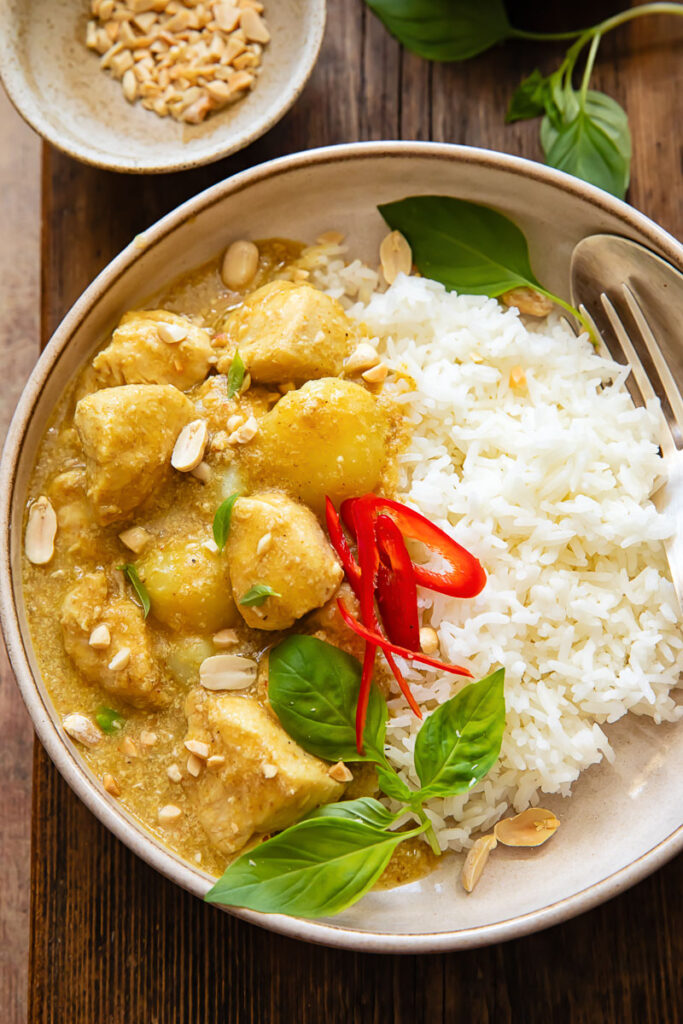
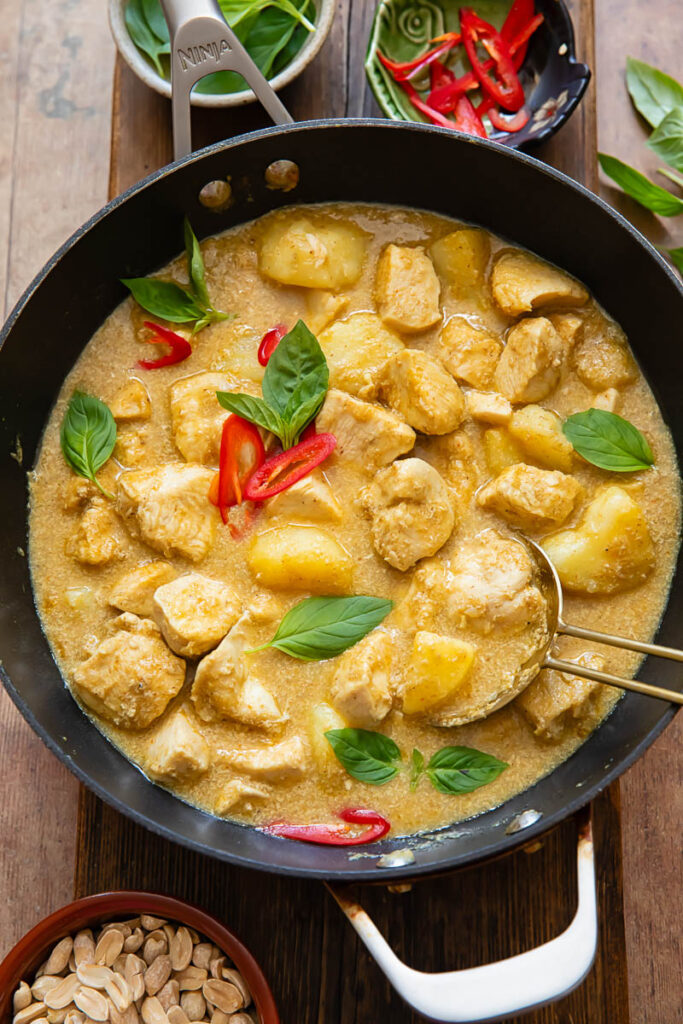
Yellow chicken curry with potatoes is a reassuringly mild Thai curry. Sweet with coconut milk, familiar with soft, lightly spiced potatoes and topped with crunchy peanuts, this curry is a soft introduction to fiery Thai food. And a midweek meal dream come true- only one pan to wash up and done in 35 minutes!
Already a seasoned Thai curry eater? How about Thai soups? Ideal for a lighter lunch, these brothy noodle recipes are pure comfort when it’s cold outside. Fragrant with lashings of fresh lime and sharp tomatoes, this classic Thai noodle soup with chicken is a spicy winter warmer.
I like to think of Thai curries as a little like traffic lights. There’s red, green and yellow. And there’s an easy to follow system that signals to the learner Thai curry-eater.
Green curry is regarded as the spiciest, thanks to the generous amounts of fresh, chopped, green bird’s eye chillies- if you’re heat tolerance is low, you might want to GO straight past this one!
Red curry is in the middle. Still laden with fresh and fiery chillies, the red ones don’t pack as much punch as the green. So, you might want to STOP and think about it before taking the plunge.
And yellow. Nice, mellow yellow! You’re not getting away with no chillies in a Thai curry recipe, but yellow uses the fewest (red) chillies and the heat is dampened further by plenty of calming coconut milk. Yellow curry is a good place to PAUSE, savour, and decide which light you’ll feel brave enough to go for next time.
Thai yellow curry
Although I haven’t been to Thailand yet, I have done my research. And, as you know, I love a bit of linguistic trivia (being an ex-English teacher and all) so here’s a tidbit about yellow curry.
The Thai for yellow curry is gaeng karee, which translates into English as curry curry. Weird, right? Well, ‘gaeng’ refers to the dish curry, as in Thai curry soups, or red or green curry, and ‘karee’ refers to the spices and flavourings of a typically Indian curry. Fascinating!
In the yellow Thai curry recipe, you’ll find coriander, cumin, ginger and garlic- all associated with Indian-style curries. And of course, turmeric, which is what gives it its ochre-coloured sauce and its name; ‘yellow’ curry.
Perhaps unsurprisingly, yellow curry is the most popular dish with Thai Muslims, so you’ll always see this dish with either chicken or beef. Never pork.
However, you can make this dish with whatever you protein prefer, even white fish. The staples are yellow curry paste, coconut milk, potatoes and peanuts. I haven’t in mine, but it’s possible to add vegetables too. Bell peppers, bamboo shoots, green beans or mushrooms would all work.
I’ll also admit to using a pot of store-bought yellow curry paste. And you should too! I recommend choosing a Thai-produced one. You can be sure of their potency and quality which will show up in finished dish.
Recipe tips and notes
- Chicken in yellow curry is not chilli-heavy like red or green. And it’s gorgeous golden tones come from mild spice, turmeric.
- You can choose breast or thighs for this chicken and potato curry. My preference is succulent, skinless, boneless thighs- they won’t dry out like an overcooked breast.
- Note: if using frozen then thawed chicken, the pieces will release a lot of liquid into your sauce meaning it will take longer to thicken.
- I’ve used 3 tablespoons of my favourite This is an affiliate link.Thai yellow curry paste, Mae Ploy. It is exported from Thailand (but available in large supermarkets and online) so you know it’s authentically flavoured.
- Other brands might be less concentrated and so you might need to play with the measurement to suit your taste.
Serving suggestions
If you’re cooking a Thai yellow chicken curry for your weekly fakeout night, add some extras to the order! Here’s your menu:
Starters
Thai green papaya salad (Som Tam). I never have a Thai meal without it! It’s a surprising salad made from unripe papaya, green beans and cherry tomatoes, sprinkled with peanuts and drenched in a sprightly dressing.
Thai fish cakes. These are my supersize version of the classic deep fried street food tod mun pla. Made with salmon, Asian aromatics and no potato!
Mains
We never have just one! To contrast with the mild chicken and potato curry, try a fiery red fish curry or a veg-heavy, meat-free green curry.
And rice. Depending on the region in Thailand, you’ll be served either jasmine rice- a fragrant, fluffy, brilliant white rice, or khao niew, sticky rice. Sticky rice is glutinous, chewy and has an iridescent sheen to it. Personally, I prefer the lighter jasmine.
If plain white rice isn’t exciting enough for you, serve this hands-off This is an affiliate link.instant pot coconut rice or cilantro lime rice.
Storage and leftovers
Leftover chicken and potato curry will keep in the fridge in an This is an affiliate link.airtight container for 3-4 days. Like all curries, the flavours will develop and intensify over this time making it just as delicious on Day 3 as it was on Day 1.
There are vastly differing opinions on leftover rice though! While the U.S.’ FDA (Food and Drug Administration) suggests 3-4 days for storing rice, the UK Food Standards Agency advises one day only. In line with my countryfolk, I tend to cook fresh rice if it’s been over 24 hours.
More curry recipes to try
Yellow Chicken Curry
Ingredients
- 3 tbsp This is an affiliate link.Thai yellow curry paste
- 1 tbsp vegetable oil
- 400ml / 14 oz This is an affiliate link.coconut milk
- 1kg / 2 lbs chicken breasts, cubed or skinless boneless chicken thighs
- 2 medium potatoes, peeled and cubed
- 2 tsp brown sugar, or cane sugar
- 4-5 Thai basil leaves, optional
- 2 tbsp peanuts, chopped
Instructions
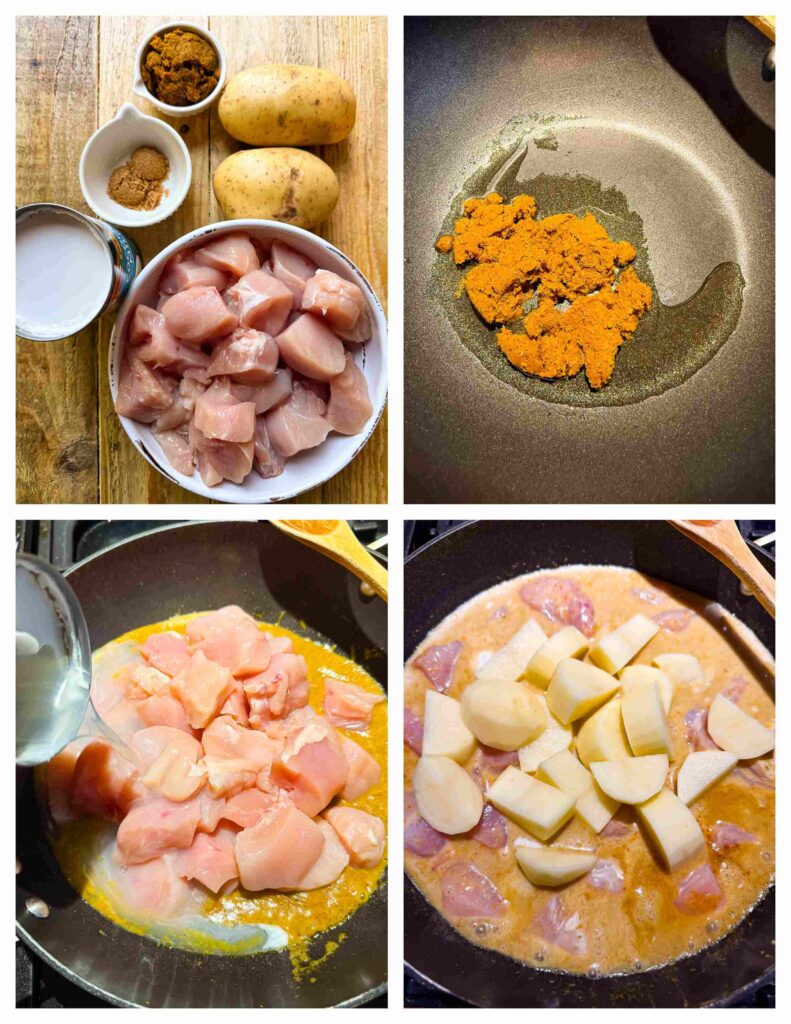
- Heat the oil in a large pan and add the yellow curry paste, continue stir frying it until it is soft and the fragrance is released, which will take about 1 minute. Then pour in the coconut milk and brink to a simmer.
- Add the cubed chicken breasts, potatoes and continue simmering the curry for 15-20 minutes or until the both chicken and potatoes are full cooked and the sauce has thickened. Mix in the sugar and take off the heat.
- Serve with jasmine rice and garnish with Thai basil leaves and chopped peanuts.
Notes
- Unlike the spicier red and green varieties, yellow curry gets its beautiful golden hue from turmeric rather than heat-packed chillies.
- For this curry with potatoes, both chicken breast and thighs work well. I lean towards boneless, skinless thighs myself since they stay moist and tender.
- Note that previously frozen chicken will release extra moisture as it cooks, which means your sauce will need additional time to reach the right consistency.
- Mae Ploy Thai yellow curry paste is my go-to brand for this recipe, and I use 3 tablespoons. Since it’s imported directly from Thailand (you’ll find it in bigger supermarkets or online), the flavour profile is reliably authentic.
- Keep in mind that different curry paste brands vary in intensity, so you may need to adjust the amount to match your preferred taste.
Nutrition
Nutrition information is automatically calculated, so should only be used as an approximation.